
Research is essential to better understand the role of SHANK2 in brain function and to develop treatments to improve the lives of those affected by SHANK2 disorders. The SHANK2 Foundation’s role in this process is threefold:
Currently SHANK2 research is limited by a scarcity of data on affected individuals because so few have been identified. As a community, we can change this by enrolling our children in the Patient Registry and research studies.


The SHANK2 Foundation Innovation Award was created to support early-stage studies aimed at advancing novel research or therapeutic strategies for SHANK2-related disorders. This pilot funding is intended to support innovative research that can lead to larger grant funding from institutions like the NIH. Applicants must demonstrate how results from this pilot study will be leveraged to pursue further funding for larger projects to advance SHANK2 treatments or biological insights. The goal is to support innovative and novel ideas, rather than advancing existing SHANK2 research.
Email ben@shank2.org to be added to our researcher mailing list to stay informed about our next grant funding cycle.
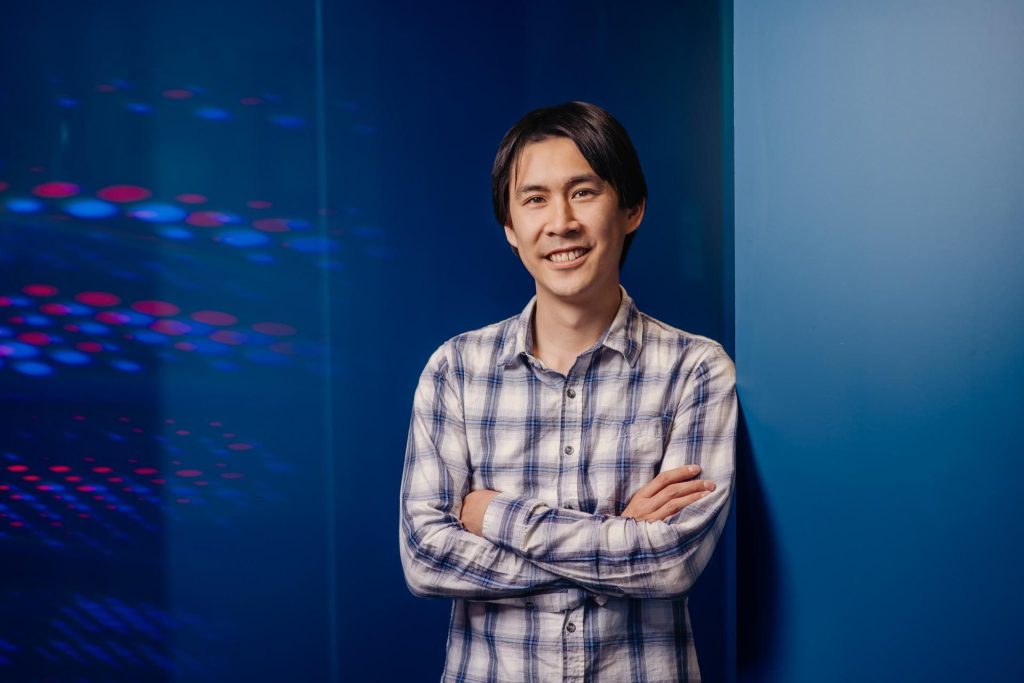
We are happy to announce that our 2025 SHANK2 Innovation Grant recipient is Aaron Kuan, PhD, Assistant Professor of Neuroscience and Biomedical Engineering at Yale University.
Project Title: A Novel Pan-Expansion Microscopy Approach to Bridge Molecular Alterations and Circuit-level Dysfunction Underlying SHANK2-Related Disorders
Project Description:
Dr. Kuan’s research project aims to better understand how mutations in SHANK2 affect the brain, including at the synapses, which are tiny structures where neurons pass signals between each other. When these connections don’t form or function properly, the brain’s ability to process information can be impaired, affecting learning, memory, and behavior.
To study this, Dr. Kuan’s team is using a new and advanced imaging technique called pan-Expansion Microscopy (pan-ExM). This cutting-edge method allows for a zoomed in visualization of incredibly small structures in the brain that were previously too small to study in detail. With this powerful tool, the effect of SHANK2 mutations in the brain can be determined at a molecular level.
Ultimately, the goal of this project is to create detailed maps that show how SHANK2 mutations change brain structure and function. These insights could lead to the discovery of new biomarkers and therapeutic targets to better diagnose and treat SHANK2-related disorders. By understanding what is structurally different in the brain due to these mutations, researchers can begin to explore strategies to overcome these differences.

The SHANK2 Foundation is partnering with RARE-X, a 501(c)(3) nonprofit, to build a Data Collection Program for SHANK2 families, sometimes called a patient registry. When you participate in the Data Collection Program, you will help accelerate research and the development of new drugs, devices, and other therapies.
Researchers can request access to de-identified data directly from RARE-X:
As our registry grows we will share summarized statistics with the community. This information may be useful to:
The information you supply is protected by strict privacy policies and you retain control over your child’s data. For any questions and concerns about what data is collected and how it is used, contact the registry coordinator (registry@shank2.org). There is no cost to join the Data Collection Program.
Phenotyping studies are done to collect information about individuals to better understand the characteristics of a disease and how diseases progress over time. We partnered with the world renowned Seaver Autism Center in New York City to conduct the first phenotyping study of individuals with SHANK2 disorders. Participants in the study underwent a common assessment and the findings will be used to build an archive of physical and behavioral characteristics associated with SHANK2 disorders for use in future research. This study is complete and the publication is available here.
As the language in research articles can be quite technical and sometimes difficult to understand, we’ve put together some information to help families understand the results in the study. Read the lay summary here.
According to top researchers studying SHANK2, phenotyping studies produce valuable information needed to:

Probably Genetic is a group of geneticists, engineers, and patients seeking to help people with rare diseases access genetic testing. The company has recently launched a no-cost genetic testing program for people with seizure or developmental delay-related disorders. Eligible individuals can receive whole exome sequencing at no cost. This testing analyzes all of the protein-coding regions of your DNA for disease-causing mutations.
Eligibility
To participate, candidates must reside in the United States. Eligibility for the program is determined by a brief, easy-to-understand online quiz. Care partners, friends, or family members are encouraged to submit on behalf of their loved one if their loved one cannot complete the Symptom Checker without assistance.

How it works
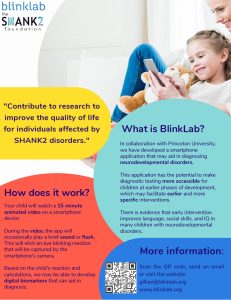
The SHANK2 Foundation is collaborating with BlinkLab on a research study to better understand brain function in SHANK2 disorders. This research study is currently enrolling. Website: www.blinklab.org.
The SHANK2 Data Collection Program is a patient data repository accessible to researchers studying the pathology of disease-causing SHANK2 variants. Please contact RARE-X to register for access to de-identified data. The Foundation can also work with researchers to discuss potential research projects and patient recruitment. Please contact the registry coordinator (registry@shank2.org) for assistance.